
Student Feature: Meet Allison Piedmonte
Learning to work with your hands means joining a long tradition of builders, makers, and problem-solvers. Woodworking, historic craft, and home renovation are deeply intertwined when envisioning and creating new possibilities for historic homes. In this feature we’ll highlight one student’s journey into woodworking and her aspirations to link skills she gained at Kumiko: Create an Asa-no-ha Panel to historic craft.
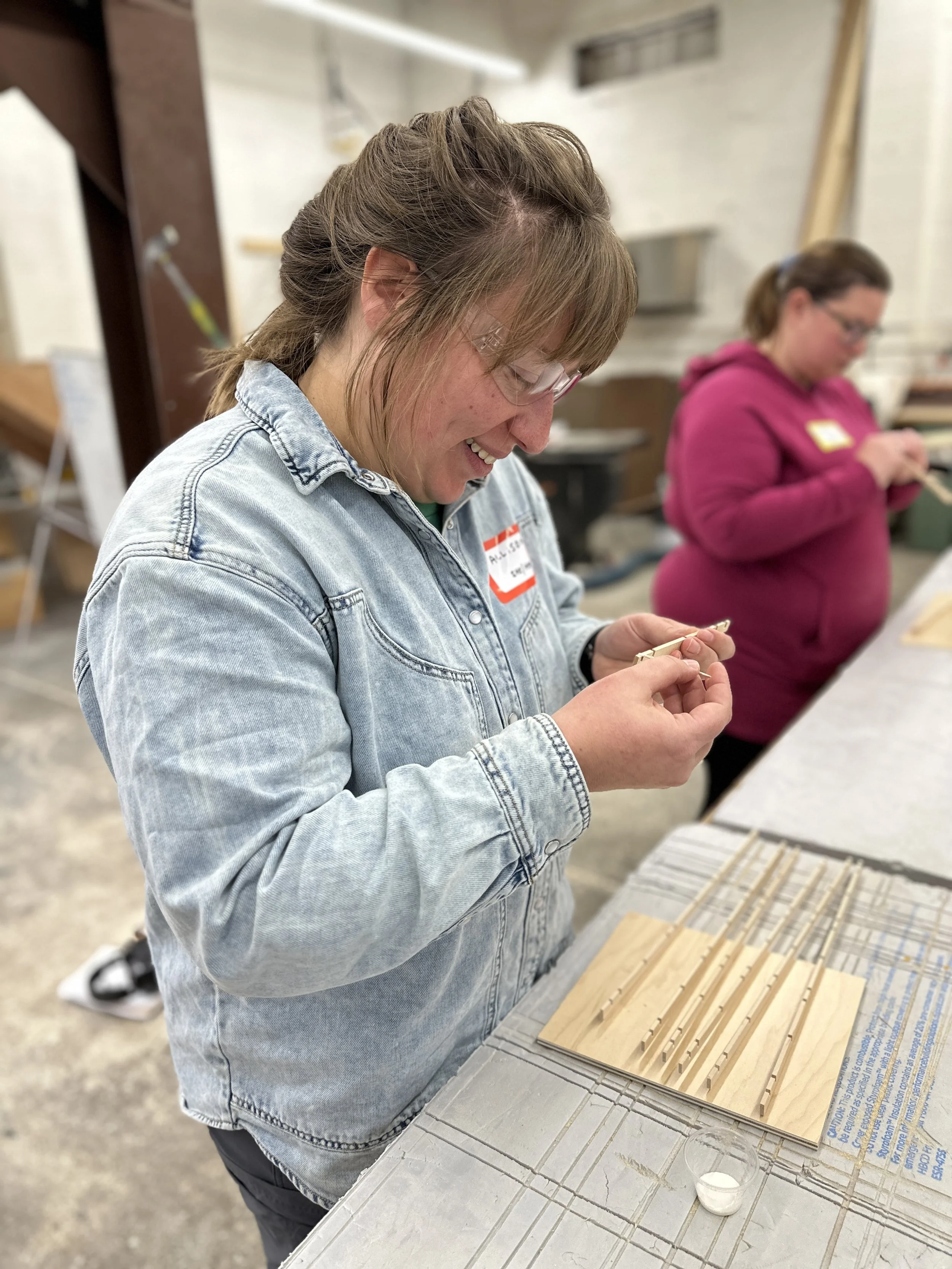
In Kumiko, students carefully cut and fit wooden pieces into decorative geometric lattices.
Introduce yourself and share a little about your creative background.
My name is Allison Piedmonte (she/her). I live in Weedsport, NY with my husband of 17 years (we were middle-school sweethearts!) and our 2 dogs and 2 cats in an 1855 fixer-upper. I have always had a creative spark. When I went to college, I completed one year of engineering and soon discovered that I needed a hands-on outlet instead. I transferred into Alfred University’s BFA program and focused my studies on Fibers, Printmaking, and Metal Sculpture. In the last year, I’ve taken three Hammerstone School classes, including Kumiko and SketchUp Basics, and recently have taken up a job as a Sample-Maker at furniture and cabinetry company L & J.G. Stickley.
Congratulations on the new job! Tell us more.
At Stickley I build projects based on blueprints from our engineers, including new item samples for the product market, custom work for companies, and one-off modifications on current products, like if a customer needs a dining table 5 inches shorter than typical dimensions.
I work in a well-stocked workshop completely separate from the main factory area, and my job is to use all the tools at my disposal to build whatever it is that I’m assigned to make! We have a planer, jointer, table saw, bandsaw, wide-belt sander, shaper, drill press, veneer joiner, and more… along with all the hand tools and power tools you’d ever need! If there’s a very specific or difficult shape that needs to be cut, it’s sometimes sent out to the factory floor to be processed on a computerized or advanced high-production machine.
I started in this position at the beginning of February, so I'm still quite new. My supervisor believes I’m the only woman to ever work in this department, so that’s really cool!
What drew you to woodworking in the first place?
Funnily enough, wood was one of the few materials I did not directly focus on in my university studies. I took one basic wood class, but that was where my exploration ended.
It wasn’t until about a year ago that I realized historic craft and building techniques were going to become the forefront of my artistic and creative practice. Since then, I have delved into my love for old homes and craftsmanship by focusing my training on fine woodworking.
What made you decide to take a Kumiko workshop with us?
During the summer of 2025, I was actively seeking any opportunities in central NY to study wood window restoration, preservation and fabrication. Unfortunately, there aren’t places to study this topic in the area, so I found Hammerstone School as a place where I could forge several classes together to gather the skills and touch points I need to continue these studies on my own. Looking at Kumiko in practice and style, its similarities to classic wood window building are unending. Taking this class felt like an opportunity to explore the artistry of create precise wood designs and applying them to larger scale, residential applications.
How did it feel working with such precision and patience?
Often, I am hard on myself for not making something 100% perfect and not having grace with myself if I do make a mistake. Thankfully, even if your angles on this process were about 96% accurate, the piece would still look exceptionally geometric and symmetrical (perhaps with a little help of wood glue and sandpaper!) but this really allowed me to relax, have patience, and enjoy the process.
How would you describe the atmosphere of the workshop?
It was simply lovely! During most of the course it was either respectfully quiet, or there was soft jovial conversations about childhood tv shows or other topics of the such.
Kumiko was comfortable and felt akin to a knitting circle or a community dinner. I loved asking questions, and never once felt like I was asking too many or was annoying anyone with my inquiries!
What would you say to someone considering taking a Kumiko class?
If someone were on the fence, I would say that it is worth taking. In a world where we are encouraged to move faster and think less, the act of carefully shaping wood in a quiet space feels like a small act of defiance to this mindset. Everyone deserves to have a moment to be purposefully slow, and to be able to emerge from that experience with a beautiful object to remind them of this time is the cherry on top.
Any advice for someone coming to Hammerstone for the first time?
Don’t be nervous! If you’re new to Hammerstone, you are in excellent and supportive hands! Any of the big cuts for the class were done together on the framing saw, and the small cuts were done step-by-step with the group. There was no stress in needing to “perform” the tasks in front of anyone individually—So no worries if you’re coming in for the first time and have no experience! Questions are always encouraged and I highly suggest asking anything that comes to mind—I live my life that way and it has never led me astray!
Big thanks to Allison for taking the time to speak with us about her creative background and experience at Hammerstone classes. You can follow her woodworking and historic craft journey on her Instagram, @perennial.purpose!
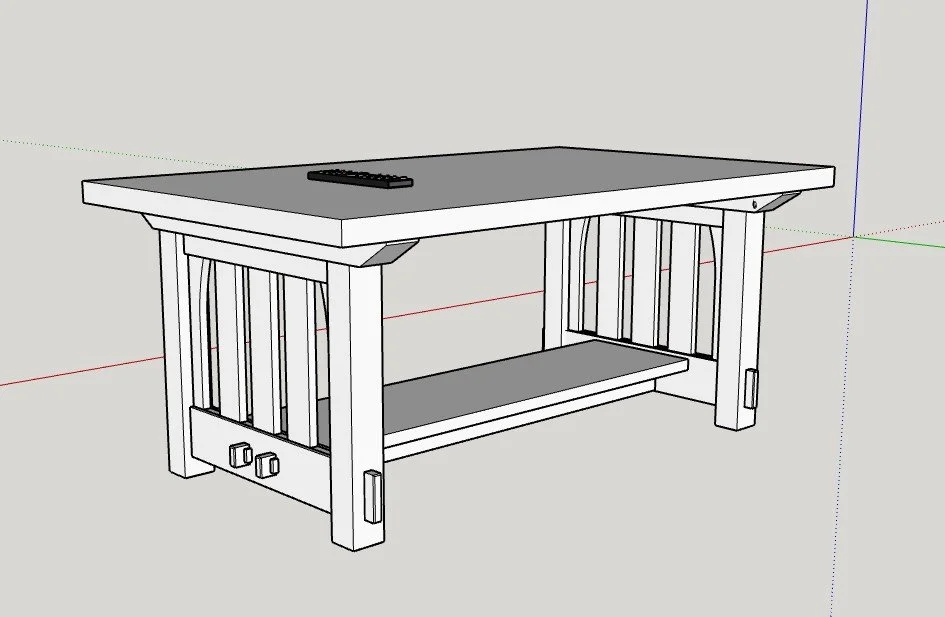
Allison’s most recent computer-aided design project, created as the final assignment for Hammerstone’s Sketchup Basics course.
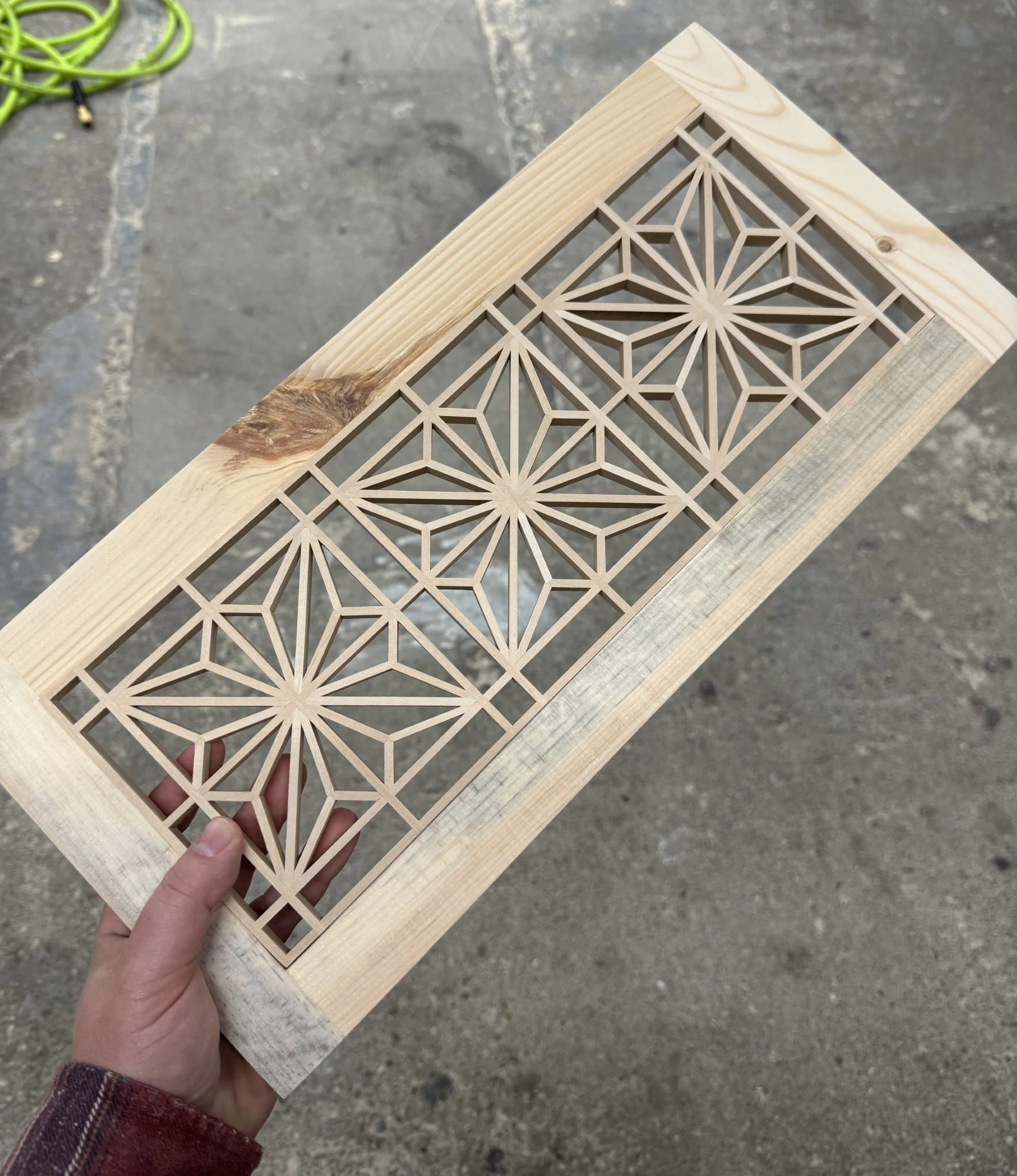
In progress Asa-no-ha panel Allison created in Kumiko.
