Meet K-lee, Union Electrician
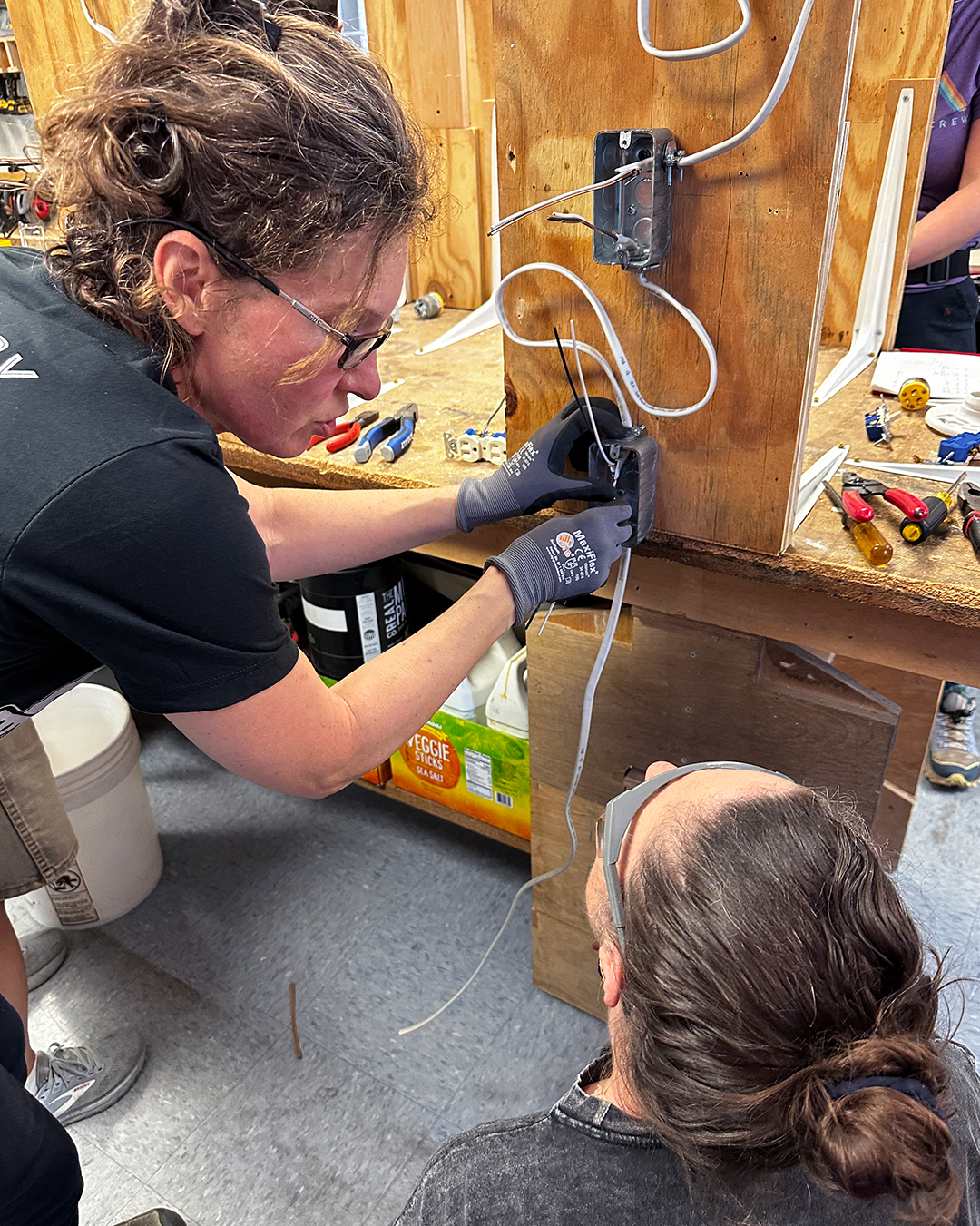
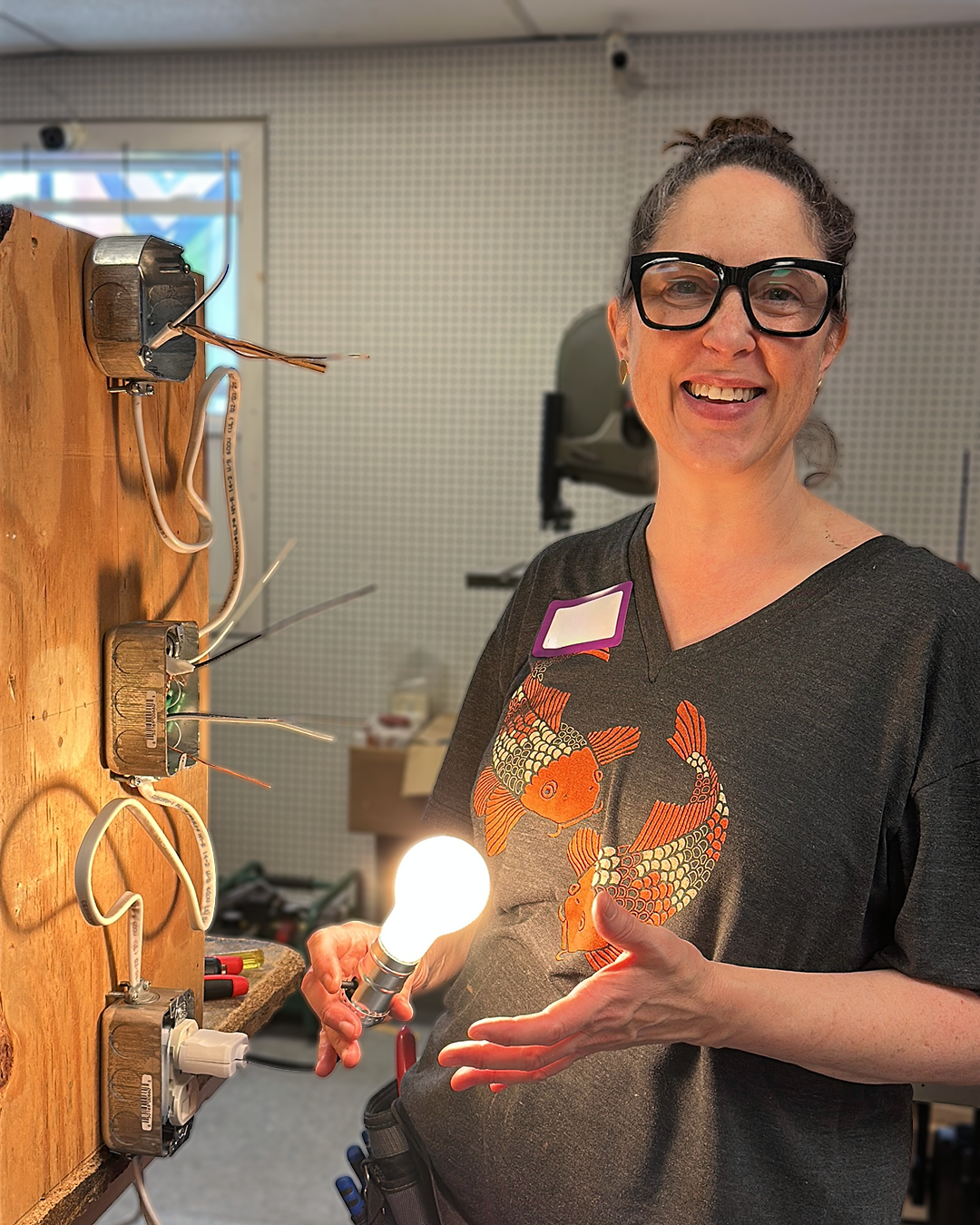
We’re thrilled to welcome K-Lee Hansen back into the shop as a co-teacher of Intro to Electric!
K-Lee is a union electrician who began her IBEW apprenticeship back in 2012 and became a journey wirewoman in 2018. She has led electrical installation in industrial and commercial sites including universities, hospitals, factories, and more. We sat down to speak with her about her journey.
You worked in a lot of different industries before settling on electric. What made you choose to become an electrician?
I was working in bookkeeping and restaurant management and my son was very young. I was interested in a change and a way to get home earlier for my boy. I wanted to do something different—something I could do using my brain and my body. I learned about different career options through an organization that helps women get into construction careers. Of the different options, I picked electric because the woman who presented about it was very interesting and excited about her field. I found the field to be fascinating. I sat for the IBEW (International Brotherhood of Electrical Workers) entrance exam, passed, and was accepted as a first year apprentice in the 5.5 year program.
The industry is full of choices, and there's always something new happening—something you need to learn. You can get training in everything from optical slicing to nuclear power plants and everything in between.
We've gotten some comments from people concerned that it's unsafe to learn electric basics in our Intro to Electric course. What would you say in response to that?
I would say it's actually the opposite. When you have a fear of something you're more likely to get hurt by it. When you have a healthy respect for it you're more likely to understand what your limitations are. Knowing the tools you can use both to ascertain the situation and follow through with repair help you understand what you’re capable of. Teaching basic electrical is saying,
'Okay, here are the tools you can use. If anything goes outside of these parameters, then you know you need to call a professional.'
The first thing we're teaching in class is safety. The second is the tools to use to test something before you go in and do anything with it.
I think the voltage tester is one of the tools every person should know how to use, whether you're an electrician, or a housewife, or anybody, because it's going to give you the parameters with which you can work. Is this safe? Can I touch this? You'll know the steps to isolate the circuit that you're working with and using the tester you'll learn when to proceed and when you should step back and not touch it.
What would you say to other women interested in pursuing a career in electric?
I would say have a good support system, get yourself in a reasonably fit condition, and go in knowing that you have just as much right to be there as anyone else. Also, go in with passion and curiosity for the job, and be yourself. You don’t have to be ‘one of the guys.’
We know that you have a passion for fitness especially for people working in the trades, and you recently started running Finger Lakes Fitness Center. What’s motivating you and what do you want to create?
I believe many tradespeople are accustomed to just ‘pushing through’ and ignoring long term consequences of their job conditions and injuries. I feel that educating tradespeople to find ways to feel fit, whether in mind or body, or both, can lead to a better long-term quality of life. I hope to attract trades clientele to Finger Lakes Fitness Center, maybe through collaboration with Hammerstone to support people on their journey to a fuller and more fit life.
With age and experience I have come to better understand that fitness is not just physical. Going into the electrical industry as a male-dominated trade, there were emotional and mental hurdles I had to get through. [I’m running the fitness center] based on multiple facets of fitness. There’s the obvious physical side to every aspect of life and work: preparing and maintaining your fitness for whatever industry you’re going into, whether it’s sitting at a desk or climbing up and down ladders all day. There’s also mental fitness: learning new things and keeping your brain fresh. Purpose-driven fitness helps you be sure you are getting the most out of whatever career you do on a daily basis. Then emotional, social, and inner fitness to support you in everyday life and challenges.
One thing that I worked on when I first got into construction was practicing awareness. When you’re on a construction site, there’s a lot of noise and there might be 8 other workers within 10 feet of you working with big tools. I needed to have the awareness to say, “I understand what’s going on around me. I can be aware of what’s happening just as I’m aware of what I’m doing.”
I would love to get people into the trades, especially women who are looking to get into the construction industry. When I got into the trades there was a balance that I needed to work out in my life and so the fitness center is starting to grow into what will be a whole “life fitness” center.
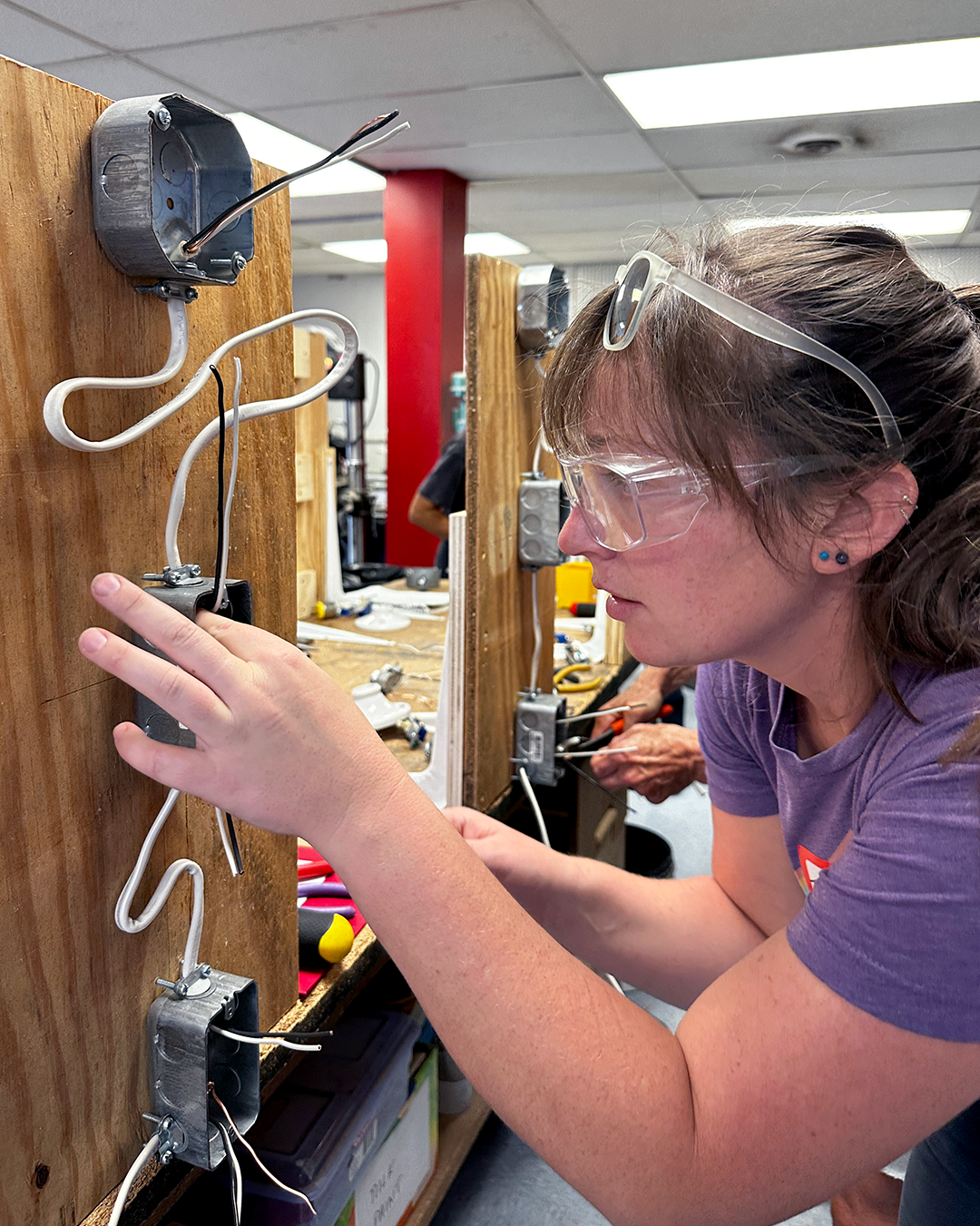
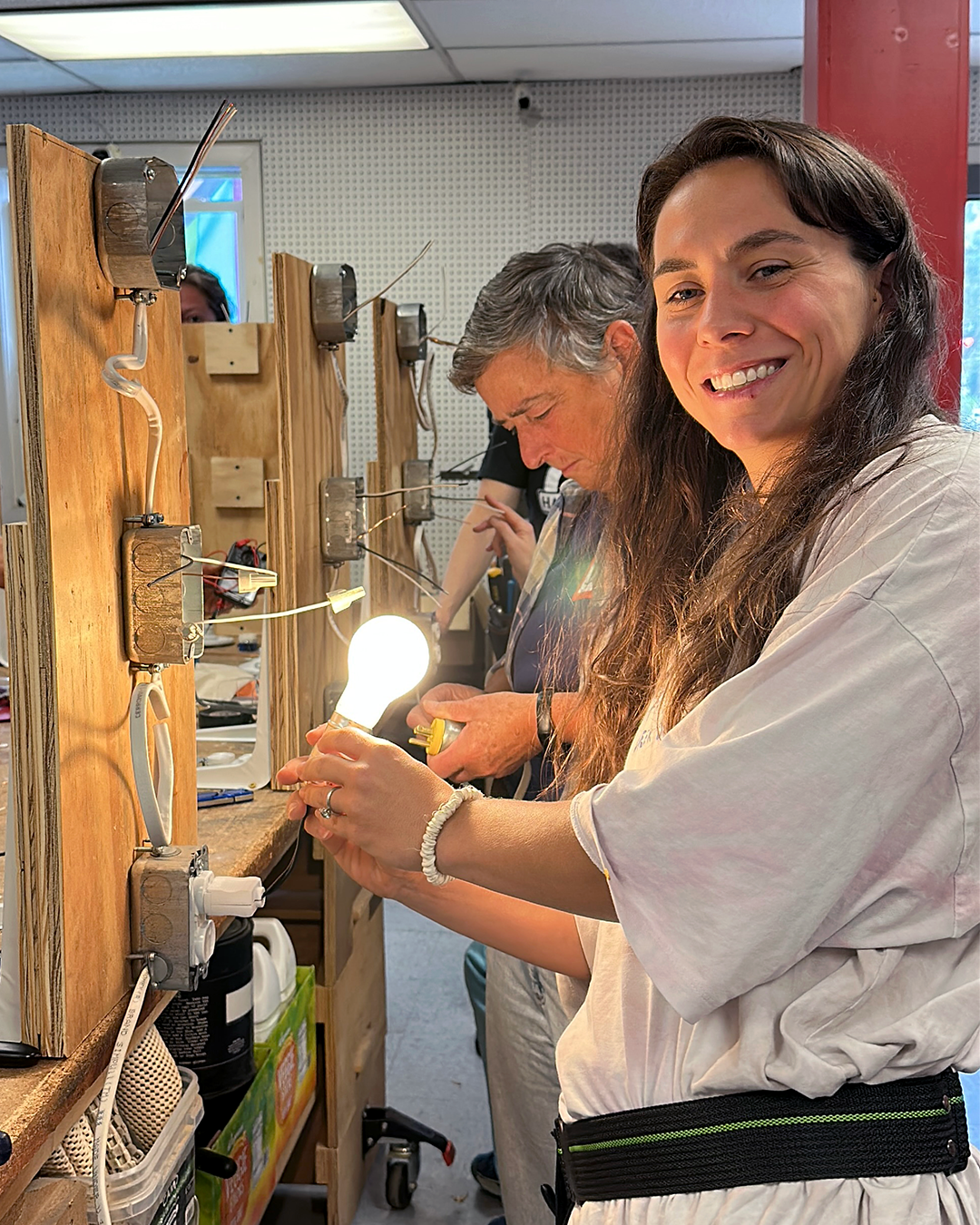
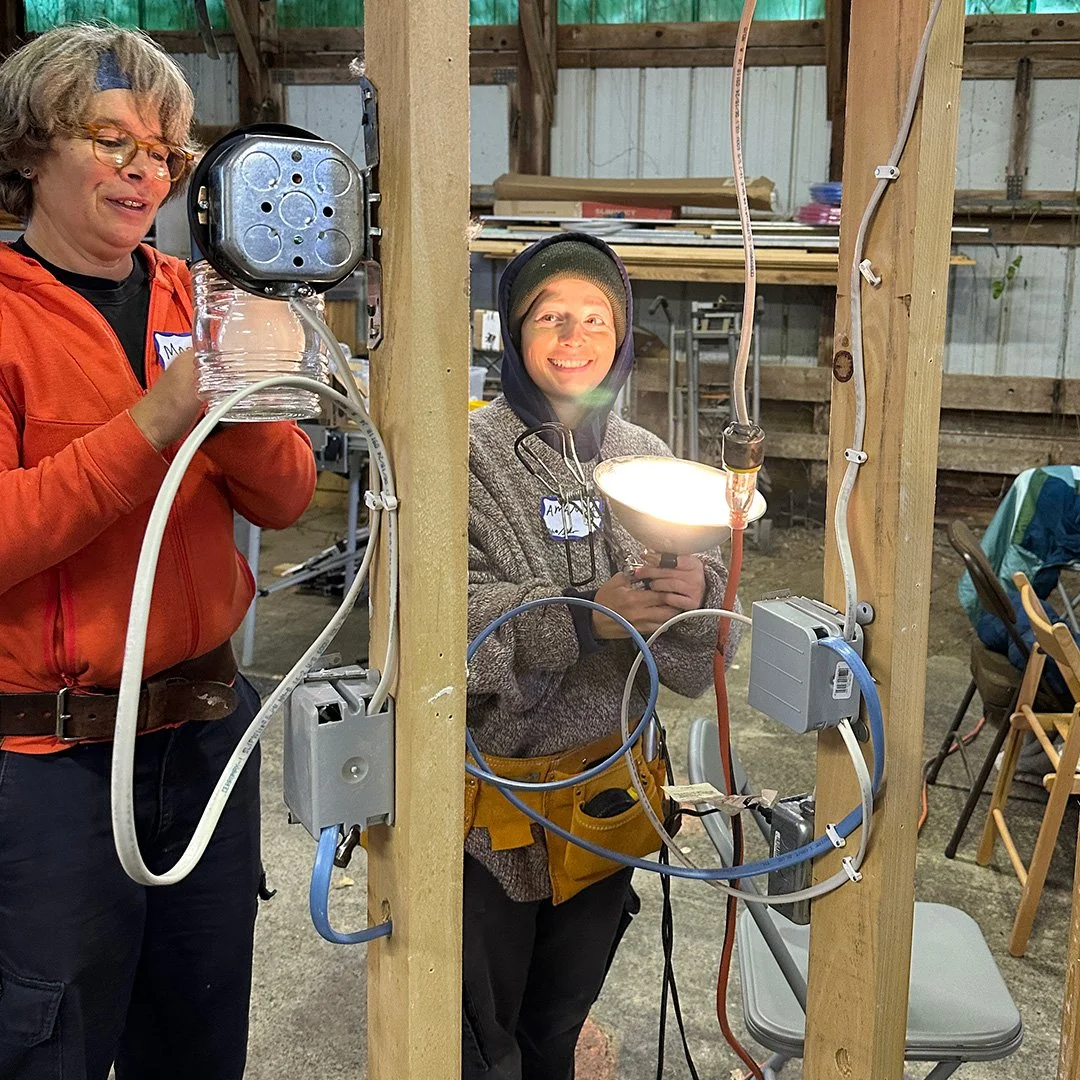
K-Lee Hansen co-teaches the upcoming class Intro to Electric, open to complete beginners.